
How Does Diorite and Gabbro Differ?
Both diorite and gabbro are coarse-grained rocks. They both form from the slow cooling of magma. This slow cooling allows

Both diorite and gabbro are coarse-grained rocks. They both form from the slow cooling of magma. This slow cooling allows
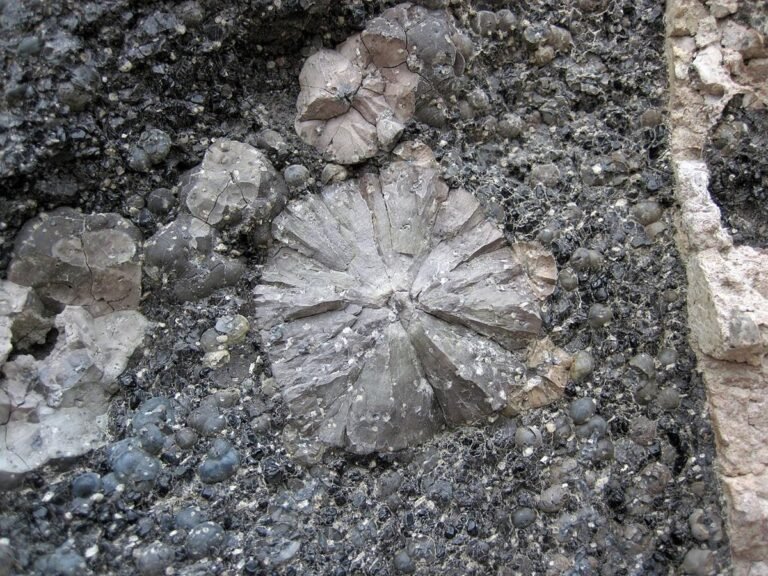
Spherulites are small, spheroidal, or globular structures common in glassy volcanic rocks. These bodies have dense masses of tiny, fibrous,
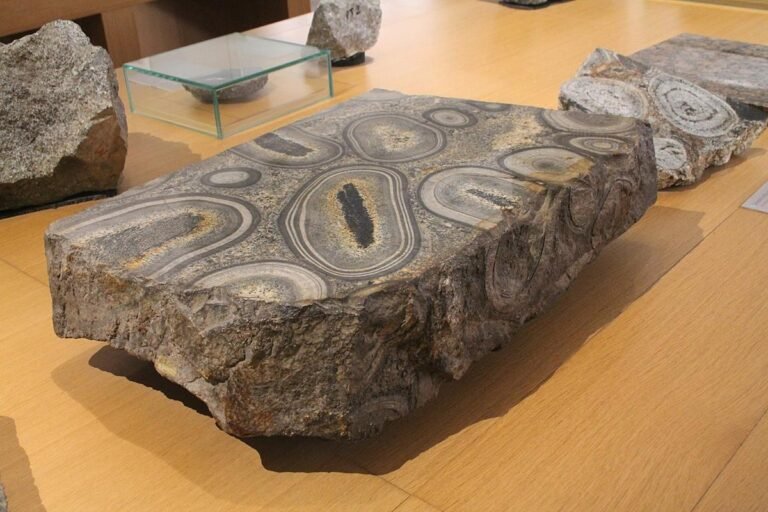
Orbicular texture or fabric describes rocks with many large ovoid or spheroidal structures called orbs or orbicules. Orbs are concentric
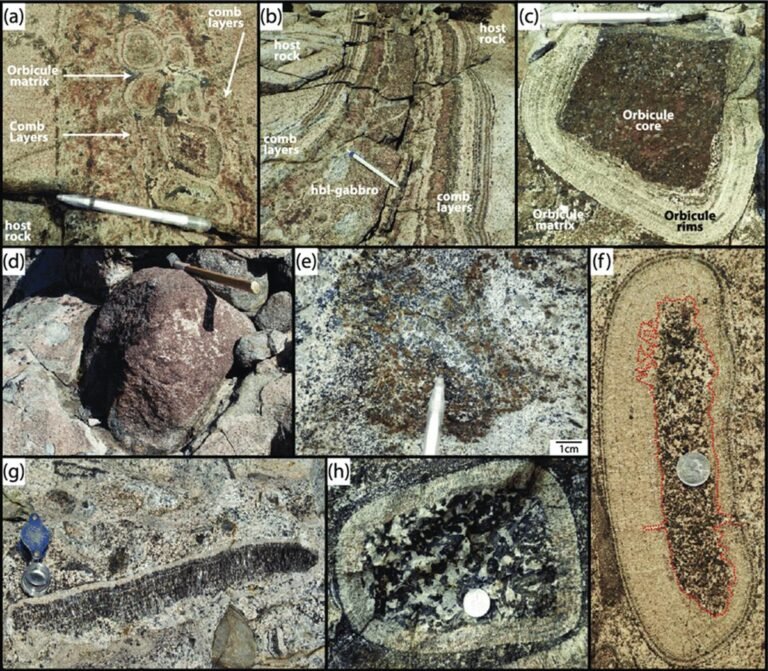
Comb layering is an igneous rock texture with long, skeletal to feathery, subparallel crystals oriented perpendicular to a planar boundary,
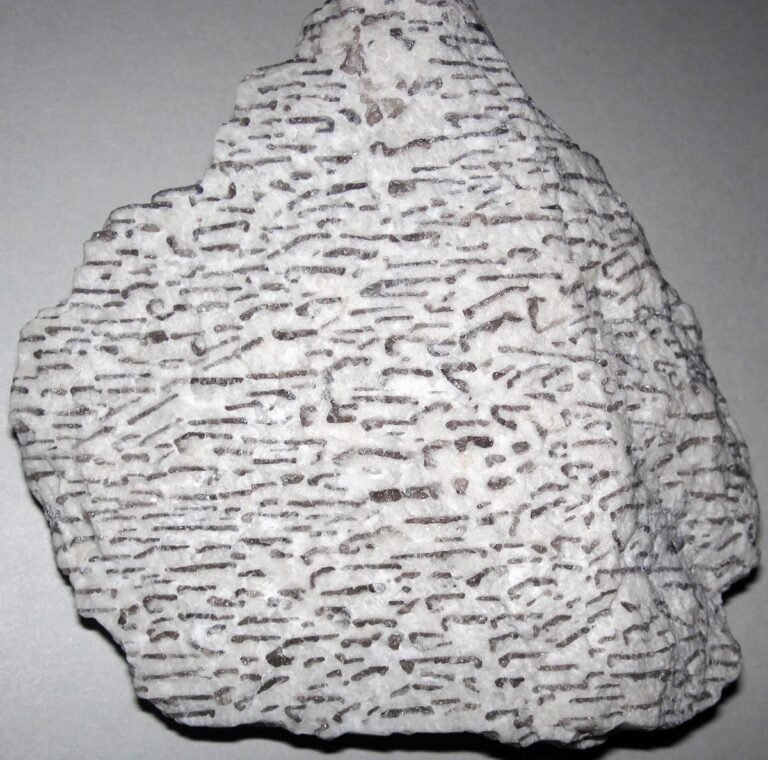
Graphic texture refers to an intimate intergrowth of quartz in alkali feldspar visible by an aided eye. This texture is
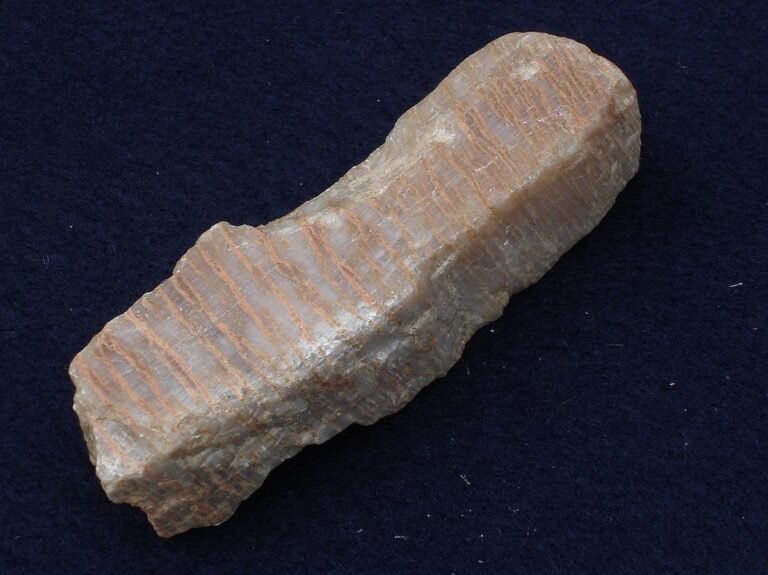
Perthite describes an intimate intergrowth of alkali feldspars, in which sodium plagioclase lamellae, blebs, or droplets exsolve in potassium feldspar.
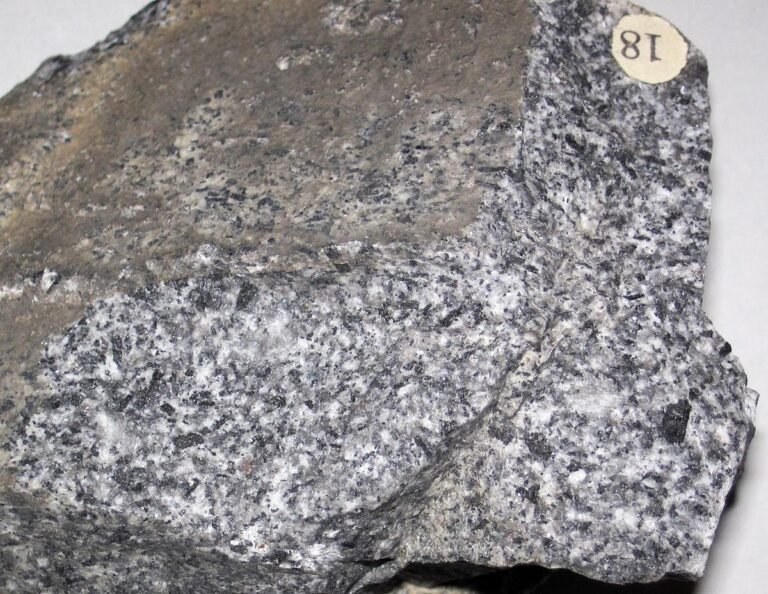
Syenite is a coarse-grained plutonic rock with intermediate to felsic composition. Its composition and appearance resemble granite but is lower
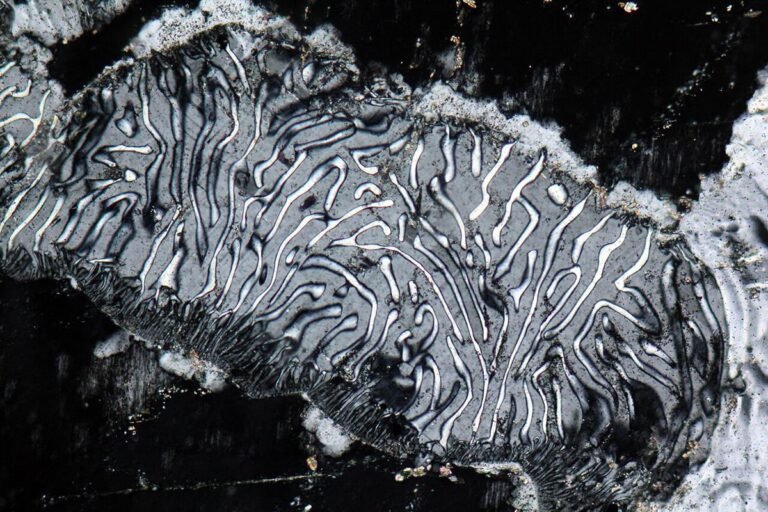
Myrmekite describes the intergrowth of worm-like or vermicular quartz inside sodium-plagioclase (Na-plagioclase) in plutonic rocks. It usually occurs at the
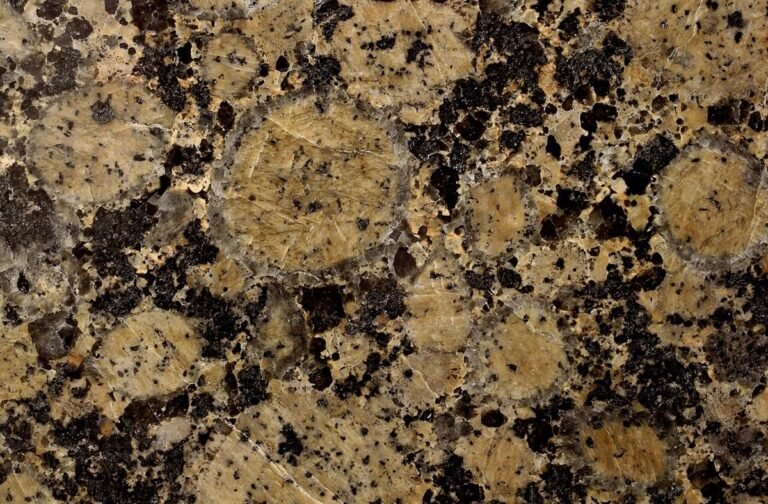
Rapakivi texture forms when sodium plagioclase overgrows on or rims large, oval to ellipsoidal potassium feldspar phenocrysts. Phenocrsyts are large
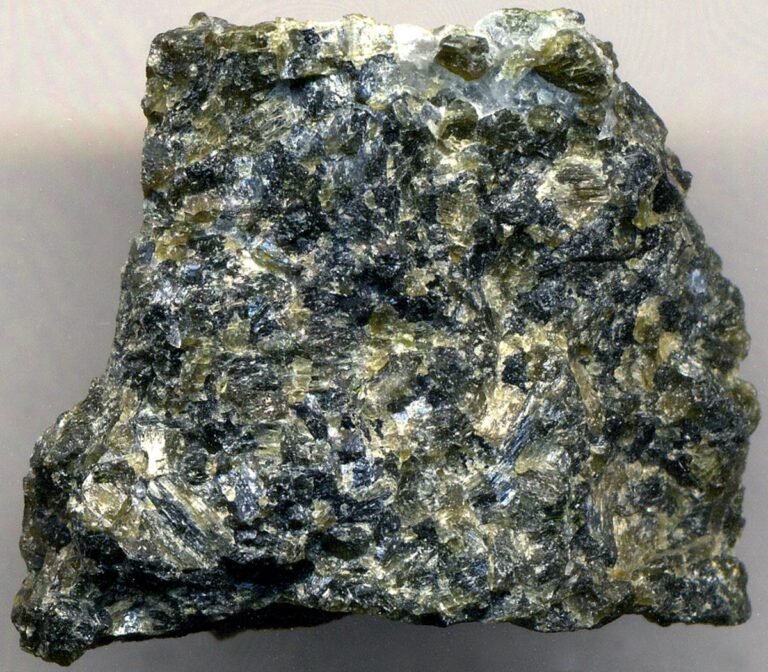
Harzburgite is a peridotite primarily made up of olivine, orthopyroxene, and a small amount of clinopyroxenes. Peridotites are coarse-grained, ultrabasic,